



“ What is the Best Street Performer Management System? ”
In 2021, various cities across Taiwan transitioned their street performer management system to a registration-based system, eliminating the previous examination and review process, ushering in an era where anyone could become a street performer.
The intention behind this change was to grant all citizens the opportunity to showcase their talents in public spaces, receive applause, and earn tips. However, some individuals exploited loopholes within the system, leading to unfair practices such as family members drawing lots on behalf of performers, fans occupying performance spots, and malicious complaints against other artists.
The best management system remains a shared question among street performers.
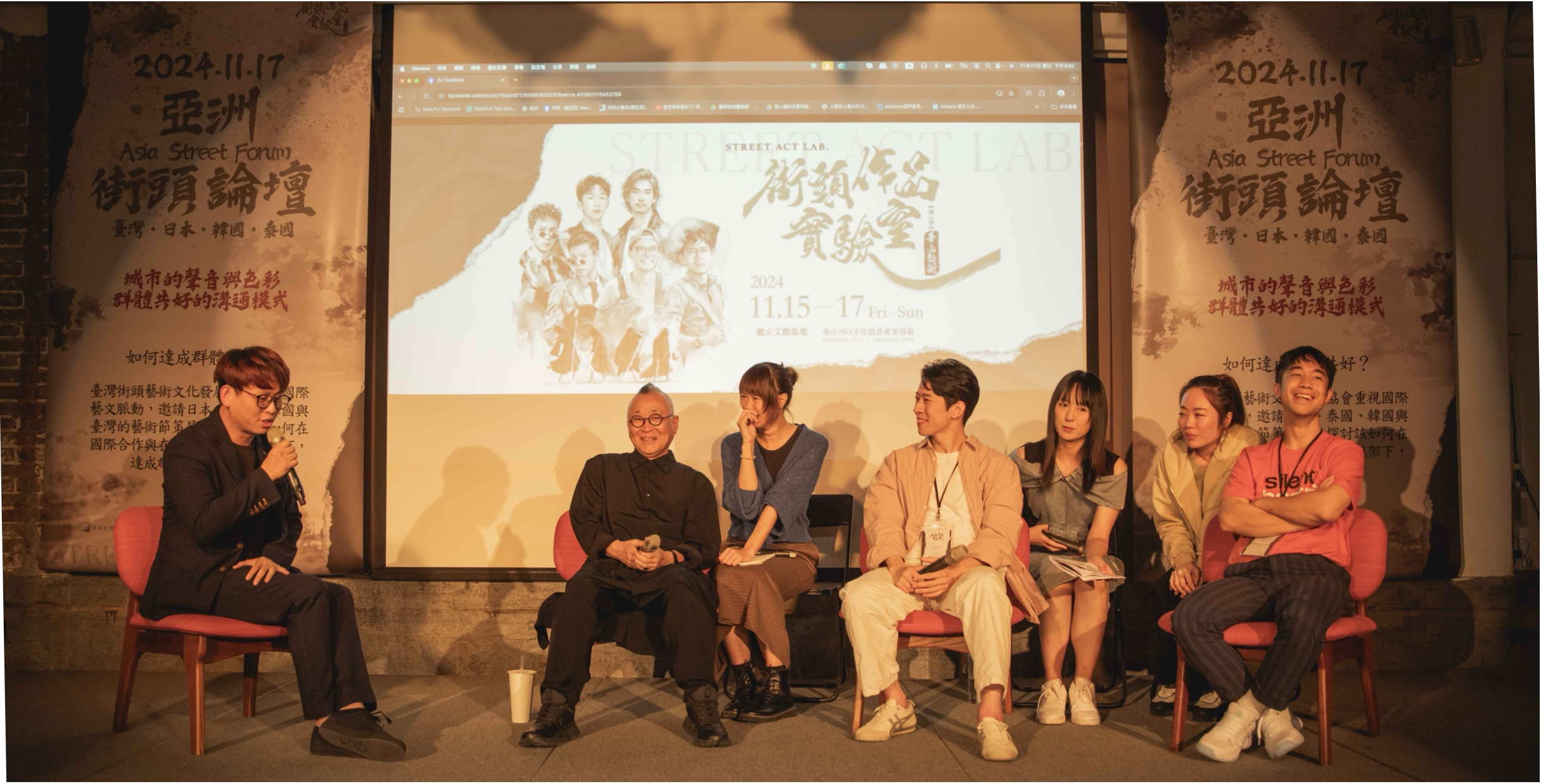
To address this, the Taiwan Street Arts and Culture Development Association has invited street performers and street arts association leaders from Hong Kong and Singapore to Taipei Huashan for an in-depth discussion. They will share insights on their cities’ street performance regulations and cultural practices, while engaging in a direct dialogue with the Taipei City Department of Cultural Affairs and Huashan street performance management team.
The goal is to collaboratively explore and develop a fair and effective street performance management system tailored for the Chinese-speaking community.
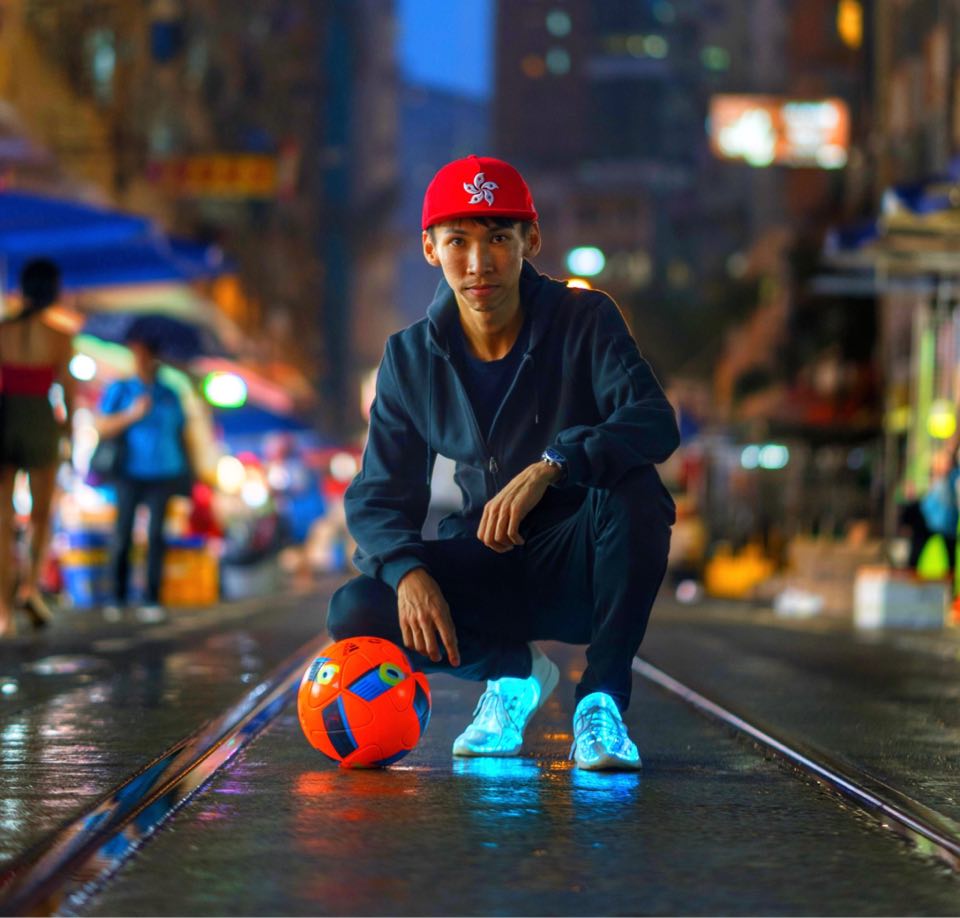
Lyson (Siu Po Shing)
a professional freestyle footballer from Hong Kong, known as the “Mong Kok Messi” for his early years performing freestyle football on the streets of Mong Kok.
He is a Hong Kong Freestyle Football Champion and later won the China Red Bull Freestyle Football World Cup (Shanghai Division), becoming the first Hong Kong representative to win an international title and the first Hong Kong player to advance to the Freestyle Football World Cup Finals.
Part 1: Self-Introduction, the Evolution of Mong Kok Street Culture, and the “Street Clearing” Incident
I am a freestyle football athlete from Hong Kong, representing Hong Kong in competitions while also performing as a street artist.
I want to share how Hong Kong’s street culture has changed over the past ten years, particularly from my personal experience in Mong Kok—a place where I have spent a long time performing.
People call me the “Mong Kok Messi” (旺角美斯), so I will talk about this place from my own perspective.
1. Mong Kok – The Heart of Hong Kong’s Street Performance Scene
Mong Kok is similar to Taipei’s Xinyi District—
It has a long pedestrian street where street performances take place, but there were never any official regulations.
Here are some photos to show the scene before the major changes.
I’ve been performing in Mong Kok for over a decade, and I remember when street performances were rare.
At that time:
• There were so few street performers that when I needed to use the restroom, I had no fellow performers to watch over my equipment.
• Over time, the number of performers exploded—you could see a street artist every five steps.
2. The Rise of Music and Dance in Mong Kok’s Street Culture
Unlike Taiwan, where street performance includes a wide variety of art forms, Hong Kong’s street performance scene is dominated by music and dance.
In Mong Kok, you can find:
Singers – Many street performers focus on live singing.
Dancers – Street dance performances are common.
Tourists – Mong Kok is a hotspot for international visitors, making it an ideal place for street performances.
In the video below (before the “Street Clearing” incident), you can see how packed the streets were with performers and crowds.
But this boom in street performances also led to conflicts and eventual government intervention, which changed Mong Kok’s street culture forever.
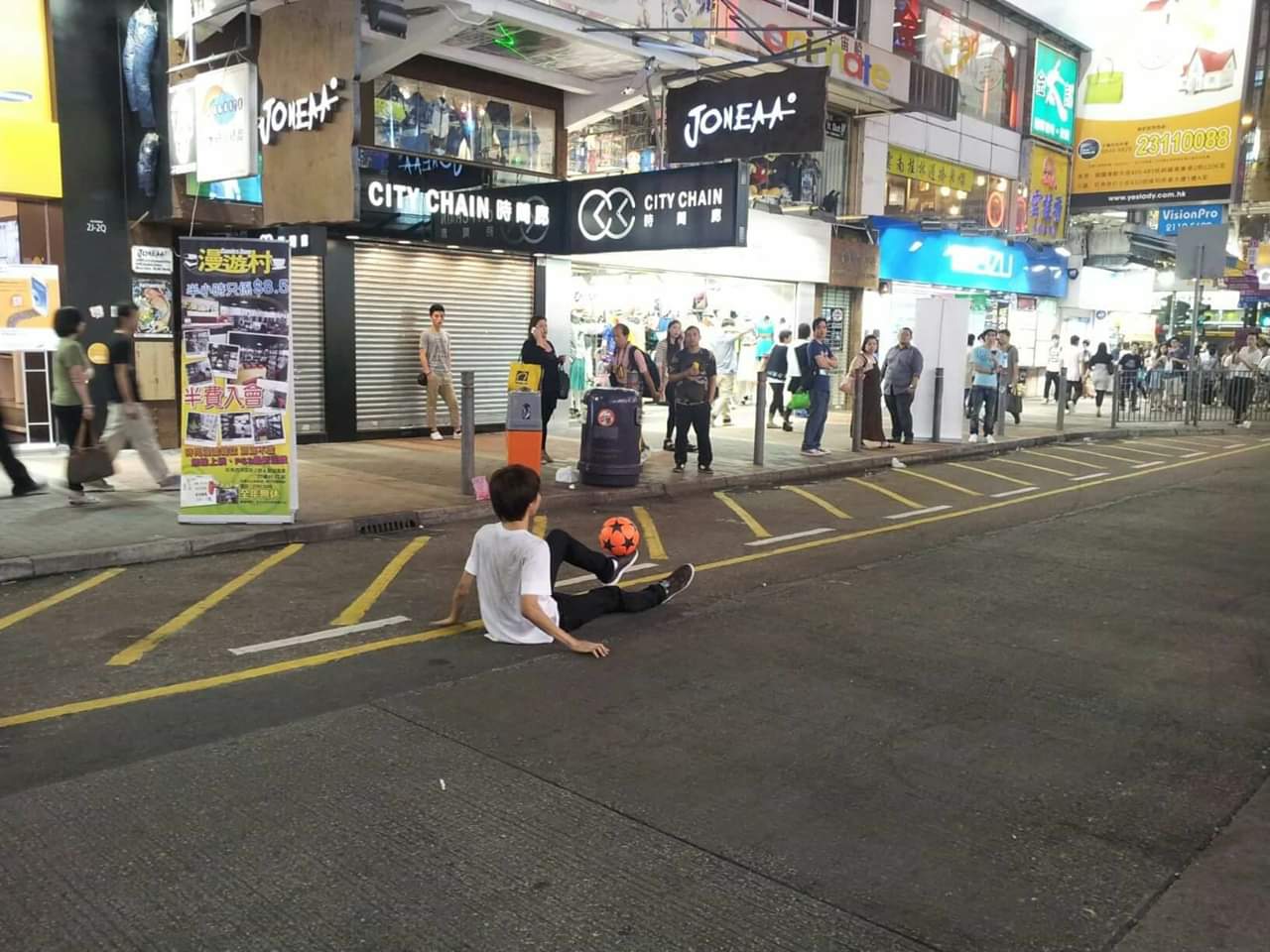
The “Territory Claiming” System of Mong Kok Street Performers
In Mong Kok, street performers claim spots by placing a mat on the ground. This is a road where cars usually pass through, but from 2 PM to 10 PM, it becomes a pedestrian-only area. At 2 PM, performers place their mats to mark their territory. But here’s the issue: 1. They often don’t start performing until 7 PM. 2. Even if they’re absent for hours, no one else can use the spot. 3. Since there’s no licensing system, there’s no way to enforce fair space allocation. This has led to an unregulated occupation of performance areas—and if you question them, there’s nothing you can do because the system does not officially exist.Street Performances or Something Else?
(🔊 Play the video with sound)
You’ll see:
Dancers performing.
Singers engaging with the crowd.
Low-quality performances where the audience isn’t reacting with “Wow, what an amazing show!”,
The “Mong Kok Night Club” Phenomenon
Mong Kok has even earned a nickname:
“Mong Kok Night Club”
This is because:
• At first, performers would simply sing songs.
• Later, they stopped singing themselves and handed the microphone to the audience.
• The audience sang happily, enjoying the attention and tipping generously.
Now, you could argue:
“Having fun is also a form of art, right?”
Sure, I can’t disagree… but what happened next?
During tipping:
Performers would start lightly touching hands while thanking the audience.
Eventually, this escalated into something else.
A female singer would perform,
An older male audience member would join her for a dance,
A few minutes later, both of them disappeared.
Guess where they went?
At that point, it was no longer about street performance—it became something else entirely.
but rather with “What… are they even doing? Where did they come from?”
Could This Happen to Taipei?
You’re probably laughing now, but let’s pause and think—
Could this happen to Taipei one day?
Hong Kong changed incredibly fast.
The influence of Mainland China reached us quickly.
Without a licensing system, this transformation happened in just 10 years.
Could a city like Taipei follow the same path?
(Now, let’s take a look at the second video. 🎥)
The “Dama Takeover” & the Consequences of No Licensing System
At first, a group of elderly women (“Dama”) started performing in Mong Kok,
They made good money.
Other Dama saw this and joined in.
They used increasingly loud amplifiers—
• One was loud, so the others went even louder.
• Noise complaints skyrocketed—over 10 complaints per day from residents.
This led to a fundamental question:
How did Mong Kok go from having no performers to being completely taken over?
One key reason: the lack of a licensing system.
The Government’s Response to Noise Complaints
Originally, Mong Kok’s pedestrian-only zone operated every day.
Performers were spread out—some performed on Mon-Wed-Fri, others on Tue-Thu-Sat.
But as the noise became unbearable, the government took action:
1. They shut down the pedestrian zone on weekdays to allow normal business operations.
2. Only Saturday and Sunday performances remained.
But with only two days left,
all the street performers rushed to perform at the same time.
The result? Chaos.
• Every five steps, there was a different performer.
• At its peak, 50 music groups played simultaneously on one street.
And yet, the performers didn’t care.
“As long as I get to perform, who cares if no one is watching?”
“Weekends are for fun—why worry about performance quality?”
But the skilled performers? They refused to tolerate such an environment and moved elsewhere.
The “Street Clearing” (殺街) Incident
The government had no choice but to ban street performances in Mong Kok altogether.
But what happens when you suddenly ban performances in a major entertainment district?
The performers simply move elsewhere:
📍 Causeway Bay
📍 Tsim Sha Tsui
This is what Hong Kong calls the “Street Clearing” (殺街) incident—where an overloaded, unregulated system collapses, forcing all performers to relocate elsewhere.
Do Performers Support the “Street Clearing” Policy?
You might think:
“Surely, street performers oppose this policy?”
But actually, many performers support it.
Why? Because without proper management,
Anyone can take over.
Art quality declines.
Street performance turns into something unrecognizable.
This is why we must ask ourselves again:
💬 What is the best way to manage street performances fairly?
Part 2: The Impact of a No-License System
I can’t say what is good or bad, but I can definitely say there are proper and improper performances.
However, without a licensing system, there’s no way to report violations.
If someone plays excessively loud music right next to me, I can only try to negotiate.
But if they refuse to turn it down, there’s nothing I can do.
It’s frustrating and helpless.
1. The Chaos of No Licensing System
Let me give you an example:
In Tsim Sha Tsui, there were three performance groups taking turns.
After the Mong Kok “Street Clearing” (殺街) incident, a group of Dama (elderly women) arrived.
I politely suggested:
“Let’s take turns—20-30 minutes per group.”
But the Dama simply said:
“No need! You guys take turns—I’ll just perform on the side!”
🎤 Then they immediately set up their speakers right next to us—
without any discussion or compromise.
The area was completely overwhelmed that day.
This is the reality of having no licensing system.
2. Taiwan’s System Is More Structured
I think Taiwan is doing better in this aspect.
• At least most performers in Taiwan understand the importance of taking turns.
• They follow an unspoken rule of rotation.
But why doesn’t the Hong Kong government enforce similar regulations?
Because the government sees it as a “hot potato.”
If they officially allow street performances,
They will be held responsible if anything goes wrong.
So their solution?
Avoid getting involved at all.
3. The Stigma of Being a Street Performer in Hong Kong
In Hong Kong, if people ask about our profession, we don’t say we are street performers.
If we do, the response is often:
“Oh, you’re one of those people singing and dancing in Mong Kok?”
Hong Kong has never truly recognized street performance as a profession.
When police approach us, they don’t treat us as artists.
Instead, they say things like:
• “Your music is disturbing the public.”
• “Even without music, gathering people obstructs pathways.”
• “If you accept tips, you’re begging.”
The goal is always to push performers away.
We’re treated as a problem, not as part of the culture.
As performers, we don’t even know what we’ve done wrong.
4. Fear of the Police: The Reality of Performing in Hong Kong
For most street performers around the world,
Their biggest fear is having no audience or bad weather.
But in Hong Kong?
Our biggest fear is the police.
We have to constantly watch for police officers.
If they show up in the last minute of our performance,
We won’t be able to collect tips—so the whole performance is wasted.
This is why Hong Kong street performances are short—
Everything must be quick, quick, quick.
5. Double Standards for Foreign Performers
Police don’t actually arrest foreign street performers.
Why?
Because if they do, they need to file paperwork and deal with immigration authorities.
Local Hong Kong performers, however, have no escape.
If we get forced out, we lose our livelihoods.
Foreign performers can just move to another city.
But for Hong Kong performers, there is nowhere to go—this is our home.
6. The Only Choice: Leaving Hong Kong
Many Hong Kong street performers are now going abroad.
Edinburgh, Denmark, other countries—
It looks glamorous, but…
It’s not by choice. It’s because we have no other options.
In Hong Kong:
“If the police come, I have to leave.”
But when I performed in Denmark, something shocking happened.
After my show, police approached me.
I immediately thought:
“Oh no, did someone complain?”
But instead, they said:
“Hey! Your performance was amazing. But there are some troublemakers around. If they bother you, come to us—we’ll help remove them!”
I was in shock.
So this is what it feels like… to be supported by the authorities.
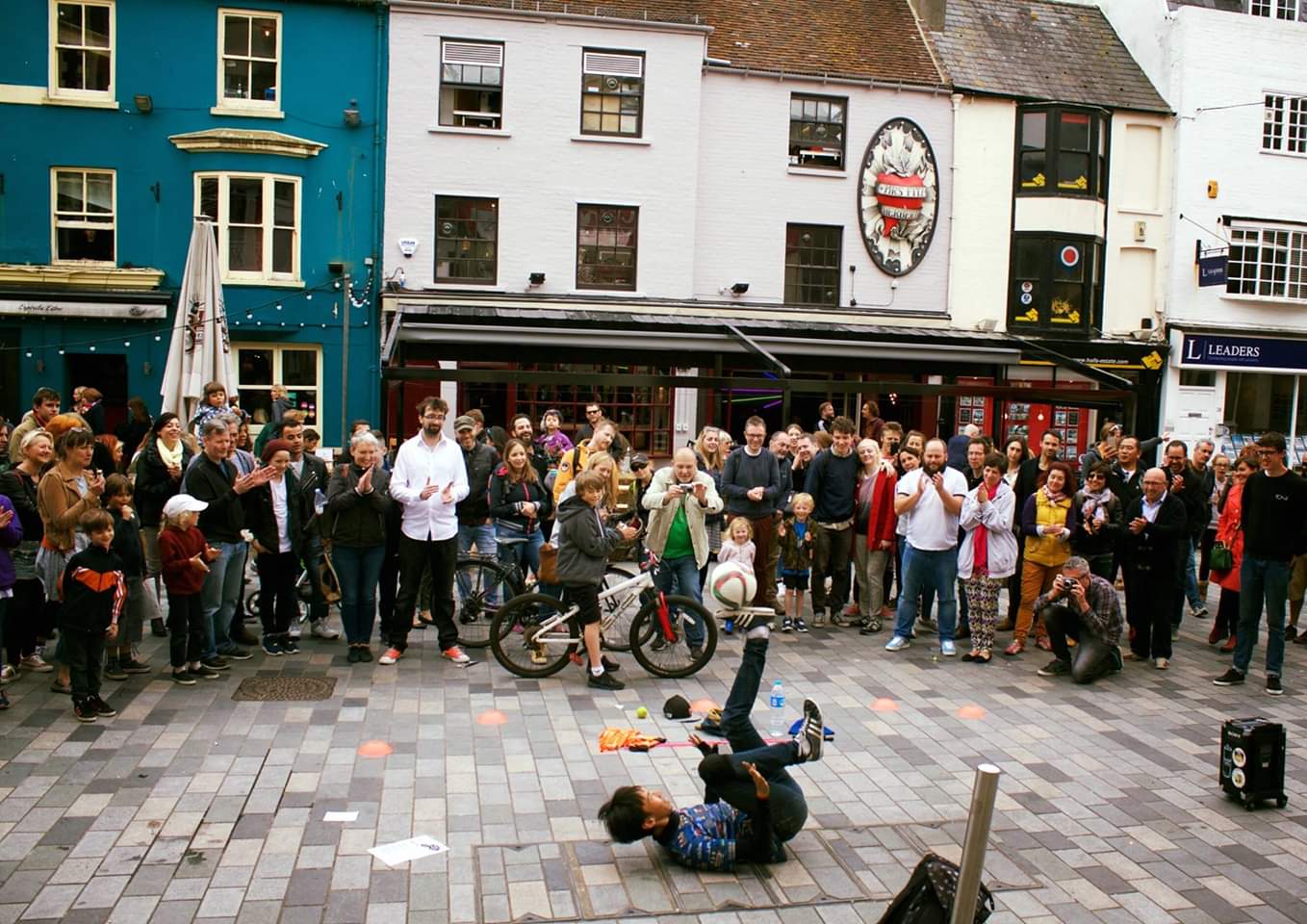
Part 3: Challenges of Implementing a Licensing System
Whenever there are many street performers in one area, malicious reports are inevitable.
Example: If I want to perform in your spot,
I can call the police, report a complaint, and have you removed—then take your place.
1. Why Hasn’t Hong Kong Implemented a Licensing System?
Hong Kong is small and densely populated, even finding a place to practice is difficult.
Ironically, discussions about licensing started in Hong Kong before Taiwan.
But the topic never gained momentum because:
Hong Kong is focused on finance and real estate.
Street performance is not considered valuable.
Authorities believe street performers serve no real purpose.
Meanwhile, in places like Australia, performers pay a 10-20% management fee,
and their system is properly regulated.
Hong Kongers are not unaware of these models.
But they look down on them—they think a few hundred or a thousand HKD isn’t worth managing.
So nothing changed… until the “Dama Invasion.”
3. The “Dama Takeover” & Lack of Enforcement
With no licensing system, there was no way to control the flood of performers.
Dama arrived in huge numbers, covering a wide range of performance styles—some proper, some not.
In a place like Singapore, where performers must be licensed,
It’s easier for authorities to regulate street performances.
But in Hong Kong?
Police had no power to enforce rules because there were no rules to begin with.
Even if the police tried:
1. They couldn’t remove one performer and ignore another—that wouldn’t be fair.
2. They couldn’t arrest everyone—it would be impractical.
3. The problem was simply too big to handle.
3. Performers’ Attitudes: No Interest in Change Until It’s Too Late
Honestly, even performers didn’t really want to improve the system.
There was no culture of fairness—no queuing, no rotation system.
The government had no choice but to shut everything down (“Street Clearing”).
Only when they lost their performance spaces did the Dama start saying:
“Okay, okay, we’ll lower the volume a little! We don’t need to fight, let’s just have fun together!”
But by then, it was already too late.
4. The Difficult Choice: Licensing vs. Total Ban
There was an ongoing debate:
“There are talented performers in Mong Kok. If the government bans performances, new artists will have nowhere to showcase their skills.”
But others argued:
“If we want to protect talented performers, we must also accept the Dama taking over.”
“If that’s the case, I’d rather ban everything—better to have nothing at all.”
And so, Hong Kong chose the total ban (“Street Clearing”).
Part 4: Newly Opened Performance Spaces
West Kowloon Cultural District (WKCD)
Opened in 2023 as a new street performance area.
It’s a huge park, and the government designated a few performance spots.
However, these spots:
Weren’t properly evaluated for audience engagement.
No foot traffic? That’s your problem.
“Here are three locations—you figure it out.”
This reflects a bigger cultural problem—
Not just among performers, but also among government officials managing them.
Seeing this forum today, I’m realizing—“Wow, right next door in Taiwan, people actually care about this issue.”
1. What is “Good” Street Performance?
I can’t represent all Hong Kong performers.
Some believe they are amazing artists (as seen in the videos).
But let me ask:
What defines a good street performance?
Who has the authority to say what is and isn’t art?
Some argue:
“You have no right to judge. Everyone has artistic freedom!”
But look at the Dama performers in the videos—
Are they helping street art?
Or are they killing street art?
If no one manages the system,
The quality of street performances will only decline further.
2. The Reality: Comparing Hong Kong & Foreign Busking Scenes
When I go abroad,
I admire how other countries treat street performers.
They have better financial support.
They have the space and time to develop high-quality acts.
They can form stable teams.
Meanwhile, Hong Kong’s situation is getting worse.
I wish Hong Kong had a space like Huashan (Taipei)—where performers could develop real art.
Some performers say, “We just need to promote our work, we don’t need laws.”
But should we start implementing legal regulations?
Would restricting some freedoms ultimately be better?
I don’t have the answer. I’ll leave that for you (the audience) to decide.

Organizers|Taiwan Street Arts and Culture Development Association
Co-organizers|Huashan 1914 Creative Park
Host|吳顥中
Panelists|Hong Kong – 施寶盛 / Singapore – 楊應豪 /Department of Cultural Affairs, Taipei City Government - 簡孜宸 / Huashan 1914 Creative Park - 陳姿君
Chief Planner|Hsu Kai-Hsuan 徐開炫
Visual Design|王璽媛
Photographers|Yang Yuan-Ching 楊元慶、王璽媛
Transcription|Hsu Kai-Hsuan 徐開炫
Writer|Hsu Kai-Hsuan 徐開炫、陳志政、呂佳玲、陳亭云