



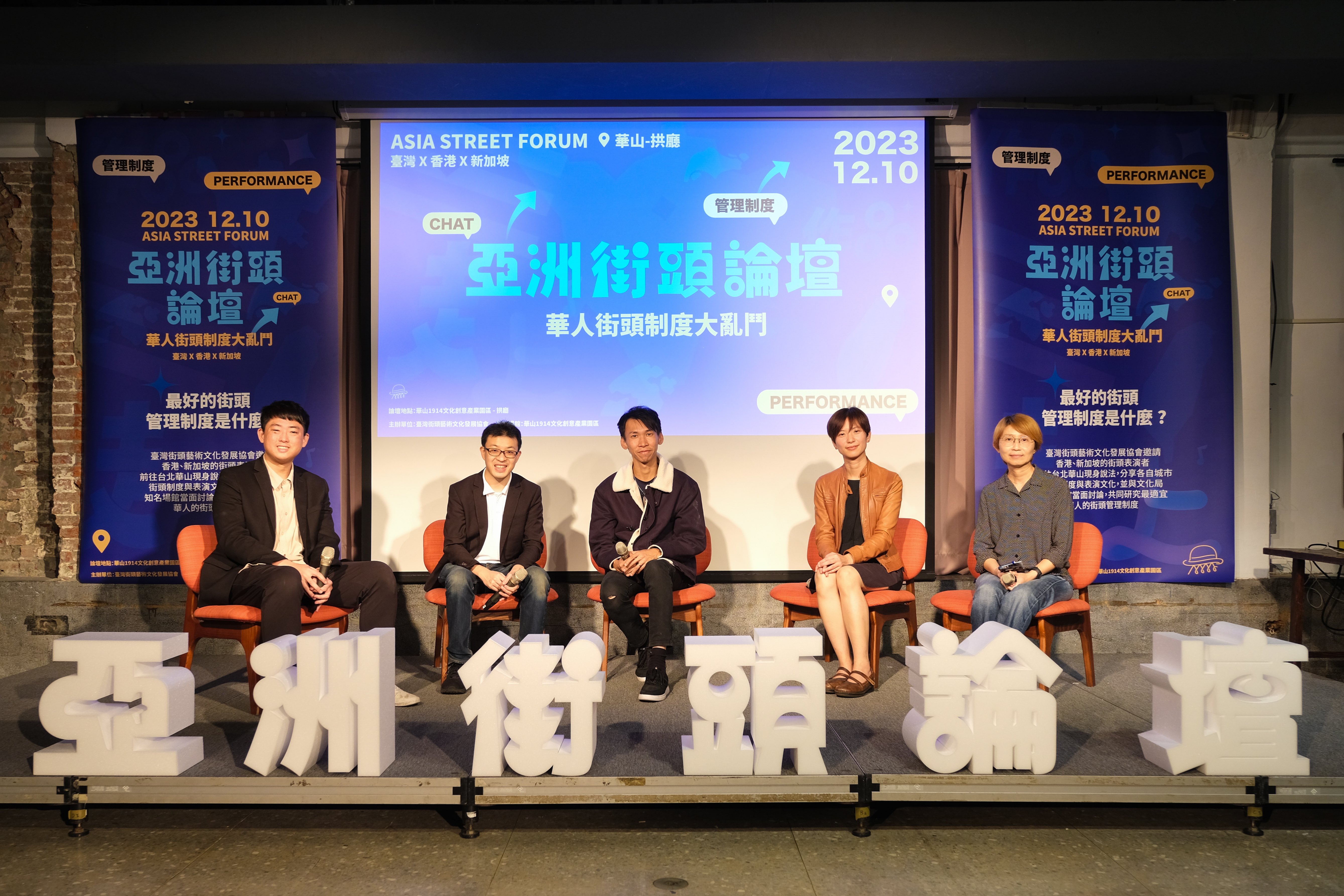
“ What is the Best Street Performer Management System? ”
In 2021, various cities across Taiwan transitioned their street performer management system to a registration-based system, eliminating the previous examination and review process, ushering in an era where anyone could become a street performer.
The intention behind this change was to grant all citizens the opportunity to showcase their talents in public spaces, receive applause, and earn tips. However, some individuals exploited loopholes within the system, leading to unfair practices such as family members drawing lots on behalf of performers, fans occupying performance spots, and malicious complaints against other artists.
The best management system remains a shared question among street performers.
To address this, the Taiwan Street Arts and Culture Development Association has invited street performers and street arts association leaders from Hong Kong and Singapore to Taipei Huashan for an in-depth discussion. They will share insights on their cities’ street performance regulations and cultural practices, while engaging in a direct dialogue with the Taipei City Department of Cultural Affairs and Huashan street performance management team.
The goal is to collaboratively explore and develop a fair and effective street performance management system tailored for the Chinese-speaking community.
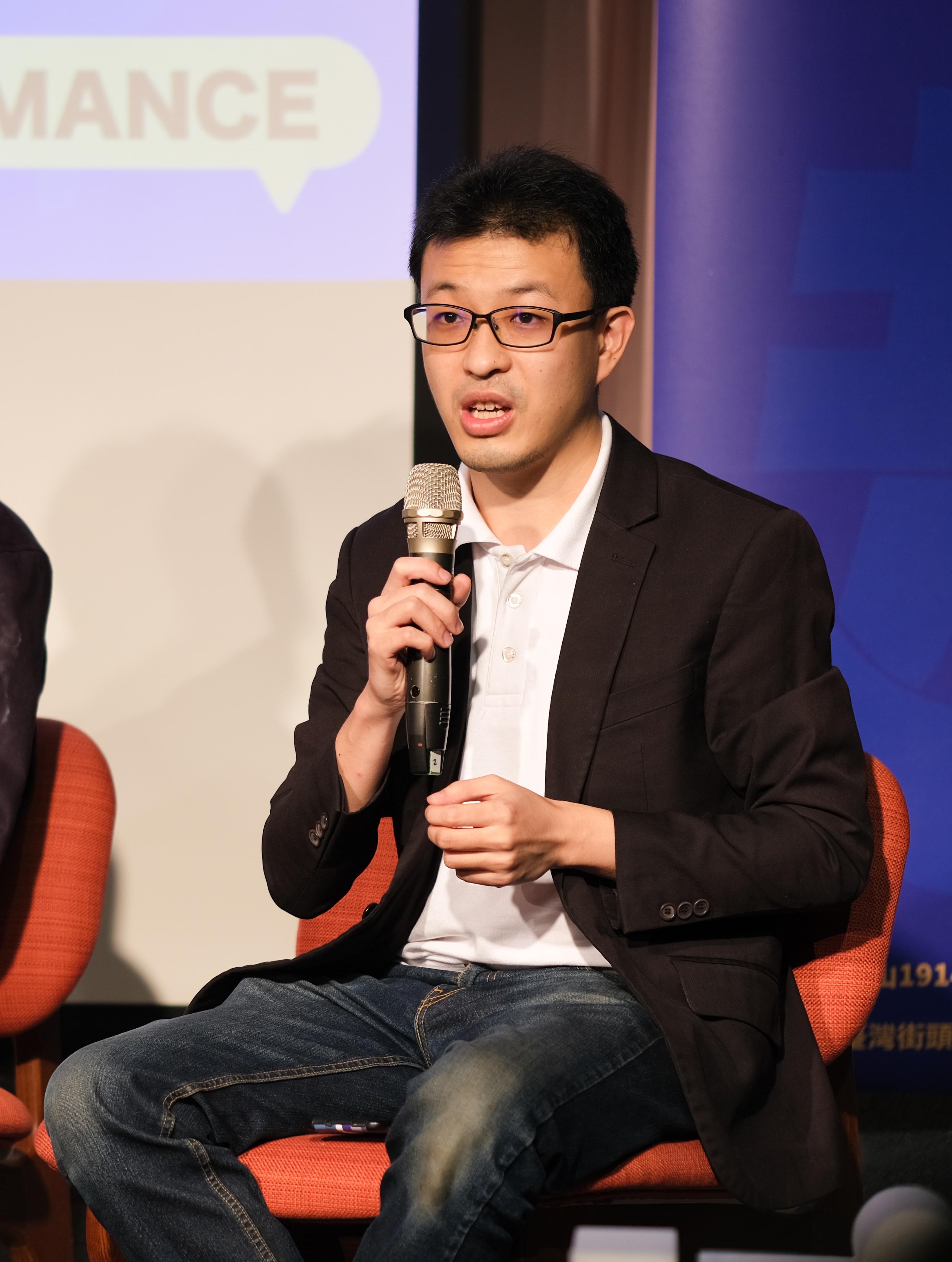
Yang Ying-Hao
Chairman of the Singapore Street Performer Association
• Founder of the Mandarin pop music band “下班族” (After Work Band), which has been performing on the streets of Singapore since 2016.
• Pianist/keyboardist for the band.
• Permanent conductor of the Western early music ensemble and choir “Cappella Martialis”.
• Music director of the orchestral group “Fete Musicians”.
Part 1: Singapore’s Street Performance Management System
What I’m about to share may be completely different from what Baosheng (Hong Kong panelist) has mentioned—almost the opposite extreme.
When you listen to me speak, you might think I sound like a Singaporean diplomat, but I’m just an ordinary Singaporean who pays close attention to how the government operates—because in our profession, understanding government policies is essential.
How Do Street Performers Function in Singapore?
How should artists and street performers operate in Singapore?
How do we align our work with the government’s overall policies?
The reason I ask these questions is because everyone knows that Singapore has strict laws.
People often associate Singapore with rules like:
No chewing gum
No spitting
No littering
However, most people don’t actually understand the reasons behind these regulations.
Perhaps because of these strict laws, Singapore has developed into a society where people have strong trust in the government. This has shaped our social culture.
So, what is the Singaporean government’s priority today?
As seen in many official statements, the answer remains: “Economic Development”.
Because of this economic focus, some people even call Singapore a cultural desert.
How Can Street Performers Survive in Singapore?
In such an environment, how can street performances exist?
Every public space or venue has many stakeholders with competing interests. As street performers, we must start at the grassroots level, find small spaces where we can operate, and gradually carve out performance opportunities.
Who Manages Street Performances in Singapore?
Street performers in Singapore fall under one of 16 government ministries—specifically, the Ministry of Culture, Community, and Youth (MCCY).
This ministry oversees a wide range of areas, including:
• Sports
• Community Development
• Heritage Preservation
Under MCCY, there is a sub-agency called the National Arts Council (NAC), which consists of over 170 civil servants. However, most of them have nothing to do with street performances.
NAC is divided into three main divisions:
• Performing Arts
• Visual Arts
• Literary Arts
Even within literary arts, there is a small sub-category called “Community Engagement”, and within that, there is an even smaller section called “Busking”.
So, in reality, only one or two government officials are actually responsible for street performers in Singapore.
And when something goes wrong, a government minister may step in. But on a regular basis, it’s just one person handling everything.
How Much Authority Does This Official Have?
Honestly? Almost none.
This official is caught in the middle, constantly negotiating with various stakeholders.
Why? Because too many government agencies have jurisdiction over public spaces.
Let me give you an example:
Imagine I stand on Orchard Road and start singing.
I may think, “It’s just a street performance, nothing complicated.”
But in reality, I am governed by multiple laws and authorities:
• The Urban Redevelopment Authority (URA) oversees the land I am standing on.
• The National Parks Board (NParks) manages the tree next to me.
• The shopping mall behind me belongs to a private business association.
• The road behind me falls under the Ministry of Transport.
• If I litter, the Ministry of Health will fine me.
• If I attract too big of a crowd, the police may arrest me under the Unlawful Assembly Act.
So, the government official in charge of busking doesn’t actually make the decisions.
Their job is to coordinate between all these agencies, negotiate with business associations, and persuade them:
“Hey, can you allow street performers to operate here?”
But the final approval still depends on multiple government departments.
Singapore’s Audition-Based Licensing System
Singapore uses an audition system to regulate street performers.
Why? Because the government fears inappropriate or disruptive performances.
However, it’s important to note that the audition is not meant to eliminate performers with weak technical skills.
• Even if a performer isn’t highly skilled, they may still pass if they show potential for improvement.
• The National Arts Council (NAC) understands that busking is often an artist’s first step into the performing arts industry.
•Even amateur performers deserve a chance.
For example, if someone sings slightly off-key, it’s not a big problem.
• The audition panel might advise them to practice more and return in six months.
• Sometimes, the issue isn’t their singing—it could be their sound system setup.
• The evaluators may provide constructive feedback, helping performers improve.
That said, some people do repeatedly fail the audition and never pass.
Strict Renewal Process & Foreign Performer Restrictions
Currently, a Singaporean busking license is only valid for one year.
• Performers must re-audition every year to renew their licenses.
• Some experienced performers question why they need to prove themselves annually, despite years of professional experience.
This system also excludes foreign performers.
• A foreigner cannot simply visit Singapore, audition, and get a license.
• They must first obtain a student or work visa, which takes months.
• If an international performer just wants to busk for a weekend, the process is too complicated.
The Singaporean Mindset & Social Behavior
Singapore’s system has two defining characteristics:
1. Singaporeans follow rules & trust the government
• You rarely hear about mass protests or strikes in Singapore.
• Most people prefer to work, go home, eat, sleep, and repeat.
• They may complain privately, but it rarely leads to large-scale action.
2. A highly regulated street performance scene
• Unlike Hong Kong’s more flexible system, Singapore’s busking environment is highly structured.
• Government policies prioritize economic development over artistic expression.
So, within these strict regulations, street performers must navigate the system carefully to find opportunities for artistic expression.
Part 2: Underground Culture and the “Egg Yolk & Egg White” Zoning System
Host :
In Taiwan, even in some regulated performance spaces, we still see underground performance culture emerging. Does Singapore have similar underground street performances?
Yang Ying-Hao:
We don’t really have underground culture in Singapore.
First, Singaporeans are generally very law-abiding.
Second, money isn’t a primary motivation for most Singaporean street performers because most of them are amateurs.
Of course, there are different types of amateur performers:
1. Some people work regular jobs but feel dissatisfied, so they start busking as a way to explore music. If they become successful and someone like Jonathan Lee (a famous producer) offers them a contract, they will gladly sign and transition into the professional music industry.
2. Others are just hobbyists—they play guitar and sing at home but want to challenge themselves by performing in public. Once they finish a performance, they’re happy and go back home.
Singapore’s Street Performance Rules & Amateur Culture
In Singapore, there are clear rules for buskers, including:
• No pre-recorded music (backing tracks) – Performers must play their own instruments and sing live.
Since solo singers cannot use backing tracks, they must find an instrumentalist to accompany them.
• If a singer is not skilled, they need to find a guitarist or keyboardist, which can be difficult.
• This also naturally filters out less serious performers.
Most buskers in Singapore don’t rely on street performances for a living.
After COVID-19, many full-time street performers left the industry.
• Since they couldn’t perform for three years, they switched to other careers and didn’t return.
• Some came back but only perform once a week for extra cash.
Many buskers are office workers (including myself), who picked up an instrument during the pandemic or always wanted to sing. Now that they can go out and busk, they pass the audition but only perform occasionally (e.g., once a week or once a month).
Because the performers change frequently, it’s difficult for an underground culture to form.
Singaporean Attitudes Toward Underground Culture & Rule-Breaking
Singaporeans don’t really like underground culture.
• If you’ve visited Singapore, you’ll know that we love to queue.
• Not only do we love queuing, but we hate it when people cut in line.
For example, if someone cuts in front of me, I won’t directly confront them.
Instead, I’ll loudly call my wife on the phone and say:
📞 “Oh yeah, dinner might be late tonight. Some guy just cut in line. I don’t know what’s wrong with him—maybe his parents didn’t teach him manners?”
That’s how we deal with rule-breakers.
Host :
For example, in Xinyi District (Taipei), we officially allow three performance groups, but sometimes a fourth or unexpected performer shows up. In Singapore, would performers report unauthorized buskers?
Yang Ying-Hao:
Before COVID-19, the government strictly assigned performance spots.
• If you got a permit, you could choose from five designated locations.
• The government already decided how many performers were allowed in each space.
This avoided major conflicts.
• Occasionally, two groups accidentally overlapped, but they would work things out by spacing out or taking turns.
• Back then, there was still some underground busking, but not anymore.
Post-Pandemic Changes: The e-Busking Booking System
During COVID-19, the Singaporean government invested heavily in a new system:
🔹 e-Busking Booking System – https://eservices.nac.gov.sg/Busking/
This system completely eliminated underground performances.
Now, there are two types of performance zones:
1. “Egg White” Zones (Open Booking)
• These are less popular areas.
• You can simply log into the system, select an available spot, and claim it (first come, first served).
2. “Egg Yolk” Zones (Lottery-Based)
• These are high-demand areas (e.g., Orchard Road).
• The government collects all applications and assigns spots fairly through a lottery system.
• For example, if multiple performers want to perform from 8:00 PM to 10:00 PM, the system will allocate time slots fairly.
When performers arrive on-site, it’s easy to coordinate:
• If I see another performer finishing their set, I’ll just say: “Alright, I’m up next.”
• Each high-traffic zone has three performance spots, which are strategically placed to avoid interference between acts.
Conclusion
Singapore’s system is highly structured, ensuring:
1. Fair allocation of performance spaces
2. Minimal conflicts between performers
3. No need for underground busking
By using a digital system for scheduling, Singapore has completely eliminated unauthorized street performances, creating a well-organized and predictable busking environment.
Part 3: The Role of the Street Performer Association
Host:
It seems like the Singaporean government is very meticulous in planning every inch of land and its designated use. Also, all of your street performers operate under extreme self-discipline, and most of them are amateurs rather than full-time professionals.
With such a structured and peaceful environment, why does Singapore still need a Street Performer Association?
Yang Ying-Hao:
Every system has its problems.
There are three major issues within Singapore’s busking system:
1. Different Performance Types Have Different Needs
• Juggling, circus acts, and music performances require different types of spaces.
• But in Singapore’s current lottery system, all performers compete for the same spaces.
• This creates an imbalance—what works for a musician might not work for a juggler.
This means the system isn’t truly fair to all types of artists.
2. Full-Time vs. Part-Time Performers
• Most Singaporean buskers are hobbyists.
• However, some performers rely on busking as their full-time job.
If we use a purely random lottery system, it may seem fair on the surface.
But in reality, it disadvantages those who make a living from street performances.
Imagine two performers:
• Person A busks once a month for fun.
•Person B relies on busking to survive.
Yet, they compete under the same system—is that truly fair?
3. The System Disadvantages Elderly & Disabled Performers
• The e-Busking Booking System requires performers to quickly claim spots through an app.
• Young people are naturally faster at using the app.
• Meanwhile, elderly performers struggle to compete for spots they used to access freely.
For example:
•In the past, an elderly erhu player could simply show up at a bridge and start playing.
• Now, he must log into an app and fight for a time slot every day.
• If he fails to secure a spot, he loses his chance to perform entirely.
So, is this system truly fair?
It may be fair to the majority, but does it come at the cost of minority rights?
This is why “fairness” is always relative.
Dealing with Unexpected Situations: The Role of the Association
Aside from structural issues, sometimes unexpected conflicts arise.
For example:
• Christmas season at Orchard Road – The business association invests in a grand light festival.
• Sponsors fund the event, and some sponsors are religious organizations.
• If a church donates $1 million, they may ask to sing religious songs in a prime location.
Now, here’s the problem:
• If the church choir takes that space, buskers cannot perform there anymore.
When these big issues happen, our association acts like a traditional imperial court in ancient dramas:
“If there is an urgent matter, we make an official statement. Otherwise, we remain silent.”
Most of the time, we do nothing.
But when something serious happens, all the media come to us, and we issue public statements, write articles, or send letters to the government.
Balancing Full-Time and Part-Time Performers
I am the co-chair of the association, but I share leadership with another chairman, Jonathan.
Our structure is unique:
• Jonathan represents full-time street performers.
• I represent part-time (amateur) street performers.
• We are equals—this prevents bias toward one group.
This setup avoids internal conflicts between professionals and hobbyists.
Why We Started the Association
Jonathan wanted to establish the association after seeing Taiwan’s Street Act Lab.
• During COVID-19, we attempted to organize similar workshops.
• The first session (2022) was successful—people gathered, exchanged ideas, and learned.
•However, by 2023, things changed.
Once the COVID-19, people asked:
“Should I go to a workshop? Or should I just go make money on the streets?”
Most performers chose to busk and earn money, so they stopped attending workshops.
This proves that:
• When performers are unable to work, they prioritize learning and self-improvement.
• But when street performance becomes profitable again, they focus on making money instead.
Our Association Functions Like a Business Guild
We should not think of our association as a typical artist union.
Instead, we should see ourselves as a business association.
Because in reality:
• Every street performer is a small business owner.
• Every performer is running their own personal brand.
When performers see financial opportunities, they will prioritize making money over community activities. During the COVID-19, people couldn’t earn money, so they focused on education and skill-building. Once the economy reopened, they returned to work and stopped attending workshops.
This is the basic mindset in Singapore’s street performance industry.
Part 4: The Role of Political Influence
Host :
This story sounds 90% similar to Taiwan’s experience.
Hearing about how your association was formed, I feel like Singapore’s story has a deeply emotional origin. Can you share more about it?
Yang Ying-Hao:
It all started when a Member of Parliament (MP) invited a street performer to perform at the Presidential Palace.
After the performance, the street artist took a few minutes to talk with the MP. He expressed his struggles as a street performer, saying:
“I don’t know how to voice my concerns or where to seek help.”
The MP responded:
“Okay, let’s find a time to discuss this. Today is not the right moment—we’re hosting the President. But I’ll get back to you.”
Sadly, before the MP could follow up, the performer passed away.
The MP felt deeply regretful and decided to take action. That’s when he reached out to Jonathan, who would later become our association’s co-chair.
How the Association Was Founded
Jonathan is a passionate and somewhat rebellious figure.
He gathered a large community of street performers and founded the association and appointed himself as vice-chairman.
Why vice-chairman?
Because Jonathan has a complicated relationship with the government.
As a full-time performer, he often pushes for policy changes. He frequently clashes with the National Arts Council because he wants better conditions for performers. He saw himself as the activist and needed a stable, diplomatic figure to balance him out.
How I Became Co-Chair
Jonathan met me at a workshop and asked:
“What do you do?”
I told him:
“I’m a classical pianist. I used to work in symphony orchestras and even held management positions in the industry.”
He immediately responded:
“Great! You should be our chairman.”
But I said:
“I’m not very in touch with street culture—I don’t think I’m the right fit.”
So we compromised:
We co-chair the association as equals. Jonathan handles public relations and internal affairs (talking to performers, organizing events). I deal with government communication (policy discussions, negotiations).
Since Jonathan’s Mandarin is terrible, I handle all Chinese-language affairs.
This dual leadership structure prevents bias and ensures both full-time and part-time performers have a voice.
Host :
It sounds like this MP played a key role.
Does Singapore’s government actively support street performers, or was this just a personal emotional response?
Yang Ying-Hao:
In Singapore, if no one complains, the government won’t act.
For example:
If a busker exceeds their performance time limit, but no one complains, then nothing happens. But if even one person files a complaint, then it becomes a big issue. Since Singaporeans follow rules strictly, you really see cases like:
“It’s 10:01 PM, and this performer is still playing music—I’m filing a report!”
Host :
Singaporeans really are a self-disciplined people.
Yang Ying-Hao:
Yes, but I must say—the MP who helped us is like a benefactor to our community.
When issues arise, he speaks on our behalf. If we need higher-level government approval, he raises our concerns in Parliament. He even offers us community spaces for Open Mic events.
What’s special about these Open Mics?
They are designed for new performers who haven’t passed the audition yet. This gives inexperienced artists a chance to gain confidence before applying for a license. This MP’s willingness to support us has been a major factor in our association’s success and growth.
Part 5: The Future of Street Performance in Singapore
HOST:
It feels like this turning point is truly a key moment for change, where circumstances create heroes, and heroes shape the times. As this transformation unfolds, we can see clear roles emerging—there are the mobilizers and the negotiators. Given Singapore’s unique environment, it seems inevitable that street performance will have a promising future.
To wrap up, could you share what you personally expect for the future of Singapore’s street performance scene?
Yang Ying-Hao:
1. Welcoming Foreign Performers as an Opportunity, Not a Threat
I wouldn’t say I’m entirely confident about everything, but at the very least, I’m not afraid of foreign performers coming in.
I believe this is a matter of communication—bringing in international artists can elevate the overall performing arts scene. However, I also understand the balance involved. Some people see foreign artists as an opportunity for growth. Others see them as a threat to local performers.
The question is:
Will more people see it as a boost or as competition?
This is always uncertain and constantly changing.
But my hope is that one day, Singaporean performers will feel truly prepared—
“We’ve put in the effort, we’ve honed our craft, and we are no longer afraid of competing with international talent.”
2.Educating the Audience: Raising Artistic Appreciation
I also hope that, through our efforts, we can gradually educate the audience and improve their artistic appreciation.
Yesterday, I had this conversation with Baosheng (the Hong Kong panelist).
Sometimes, we see street performers saying something very emotionally charged like:
🎤 “Right here, right now, I am fighting for my dream! Your $100 donation will help me achieve it—thank you!”
But why does this work?
Let’s consider two performers on the street:
• If the audience lacks artistic appreciation, they might not recognize technical skill.
• If both performers appear similar in skill, the one who sells sympathy better will earn more money.
• Even if one performer is far superior in technical ability, artistry, stage composition, and performance design, it won’t matter if the audience doesn’t understand the difference.
That’s why I hope that by exposing the audience to better performances, we can guide them to recognize:
What is a high-quality performance?
What is good technique?
It doesn’t matter what type of performance it is—
I just want audiences to gradually develop the ability to recognize talent and craftsmanship.
This is an area that still needs improvement, but it’s something I believe we can work on over time.
3. Government & Society: A Gradual Evolution, Not a Sudden Revolution
That said, as a Singaporean, I do believe that our government listens to its people.
If society gradually starts to accept and recognize street performers,
• If people begin to see street performance as a viable career
• If we reach a level where even an average street performer can sustain a livelihood
Then, the government will take notice and will open up more opportunities.
We’ve seen countless examples of this in Singapore’s development:
• At first, a particular industry barely existed.
• Then, suddenly, the government realized its potential.
• The next thing you know, they’re building infrastructure, bringing in investors, and expanding opportunities.
This kind of progress doesn’t happen overnight—it takes the combined push of:
The government、The people、The industry itself
And yes, the government will listen, but this is a gradual transformation—
“It’s evolution, not revolution.”
It’s not an overnight change, but a long-term process of growth.
Part 6: Self-Discipline Within the System
Host :
A big thank you to Ying-Hao for sharing his insights!
From what we’ve heard today, Hong Kong and Singapore represent two opposite ends of the spectrum:
• One is highly self-disciplined.
• The other is heavily influenced by external factors (like the self-imposed rules of certain social groups).
Baosheng (Hong Kong panelist):
I have a question for the Singaporean speaker.
“If I don’t have a busking license, but we’re good friends, and I come to Singapore and start performing right next to you—would you report me?”
Yang Ying-Hao:
Yes, I would.
I really would call the police.
• If we’re friends, the first thing I’d do is tell you to stop.
•But if you refuse to listen, then yes—I would report you so the police can educate you.
And even if I don’t report you,
Somebody else definitely will.
Host :
It really feels like you’re on opposite ends of the spectrum.
So from my perspective, no matter how good a government system is—
Even in a well-regulated place like Singapore, self-discipline is still essential.
For an environment to remain stable and sustainable, we need:
1. Government support
2. Public self-discipline
3. Performers’ self-discipline
Rules will never be 100% fair,
but we can continuously improve them.
Once again, thank you to our speakers from Hong Kong and Singapore!
Let’s give them a big round of applause!
Organizers|Taiwan Street Arts and Culture Development Association
Co-organizers|Huashan 1914 Creative Park
Host|吳顥中
Panelists|Hong Kong – 施寶盛 / Singapore – 楊應豪 /Department of Cultural Affairs, Taipei City Government – 簡孜宸 / Huashan 1914 Creative Park – 陳姿君
Chief Planner|Hsu Kai-Hsuan 徐開炫
Visual Design|王璽媛
Photographers|Yang Yuan-Ching 楊元慶、王璽媛
Transcription|Hsu Kai-Hsuan 徐開炫
Writer|Hsu Kai-Hsuan 徐開炫、陳志政、呂佳玲、陳亭云